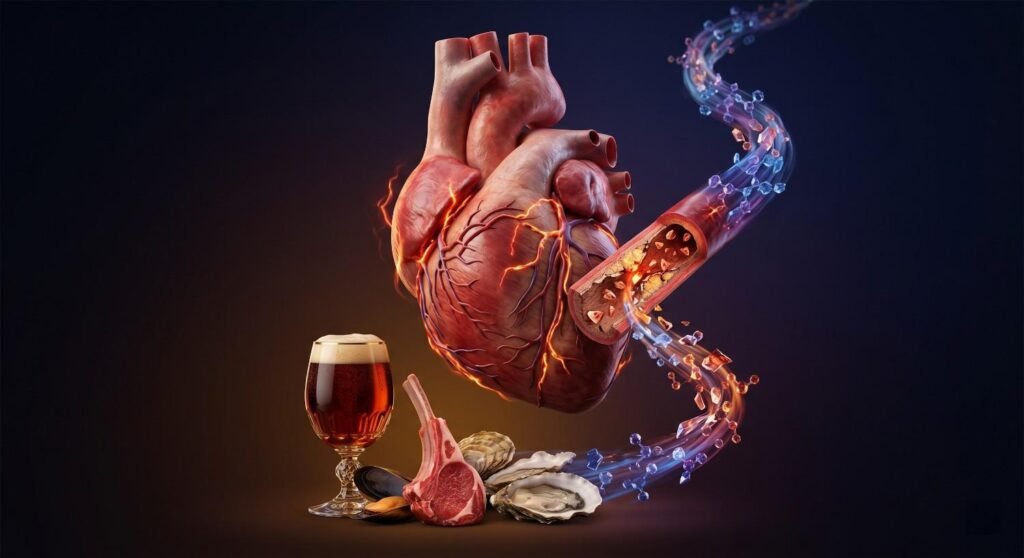
Relation Between Cardiovascular disease and Uric Acid :
Uric acid is a waste product produced when the body breaks down purines, which are found in human cells and various food items. It is mainly regulated by xanthine oxidoreductase (XOR), which converts hypoxanthine to xanthine and xanthine to uric acid. Uric acid dissolves in the blood, is transported to the kidneys, and leaves the body through urine. Recent research has provided new evidence regarding the association of uric acid (UA) with the risk of cardiovascular diseases (CVD), including arterial hypertension, atherosclerotic coronary artery disease (CAD), atrial fibrillation (AF), and heart failure (HF). [1]
High-purine-content foods include :
- Red meats – lamb, beef, mutton, pork, etc.
- Organ meats – liver, kidney, brain, stomach, etc.
- Seafood and shellfish – lobster, shrimp, mussels, scallops, crabs, mackerel, sardines.
- Alcohol – especially beer, which contains high calories and high purine content.
- Sugary foods and drinks – candies, sugary beverages, and carbonated drinks.
- Processed meats – sausages, bacon, hot dogs, etc.
- Vegetables – spinach, potatoes, mushrooms, asparagus, and cauliflower contains moderate amounts of purines. Excessive daily intake may have harmful effects on health, although plant-based purines are generally safer than animal-based purines.
- Legumes – lentils such as moong dal contain moderate amounts of purines, as do chickpeas and beans.
Cardiovascular risk increases with elevated serum uric acid (SUA) levels. Epidemiological, experimental, and clinical studies show that patients with hyperuricemia are at increased risk of cardiac, renal, and vascular damage, as well as cardiovascular events. Since the 1960s, several epidemiological studies have found an association between SUA levels and different cardiovascular risk factors or diseases, such as arterial hypertension (AH), ischemic stroke, and acute and chronic heart failure. [2].
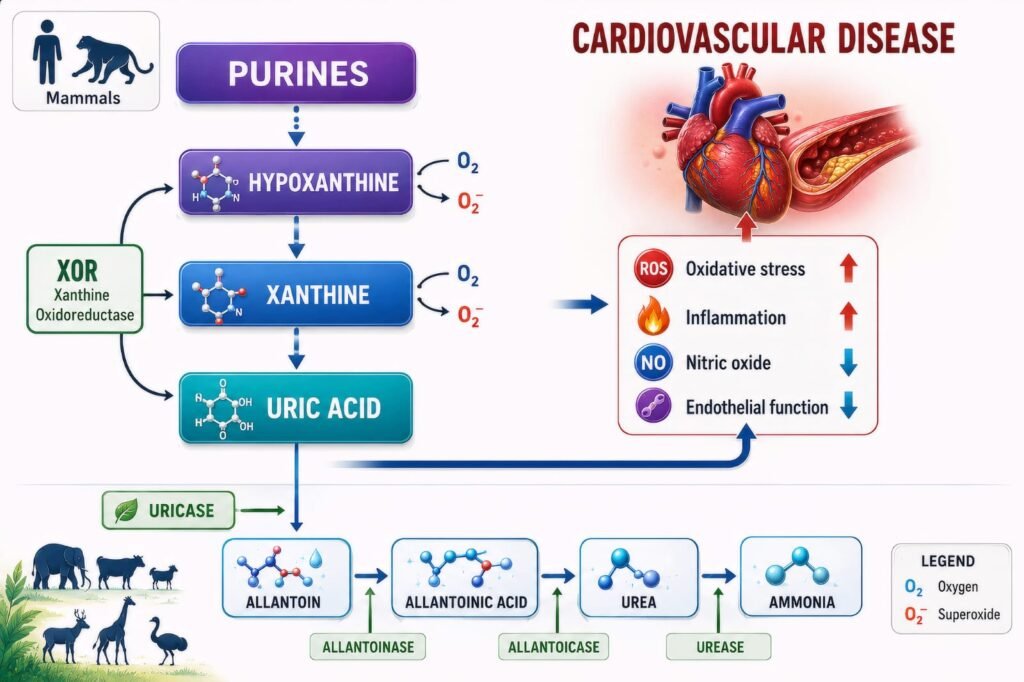
LOWERING URIC ACID HELPS PREVENT KIDNEY AND CARDIOVASCULAR DISEASES
Urate-lowering treatment can be divided into two main categories: reducing uric acid production and increasing uric acid excretion. [3]Uric acid lowering is usually done by allopurinol or febuxostat.
Elevated uric acid and hyperuricemia have been implicated as causal or pathogenic risk factors in several diseases, including cardiovascular diseases. The association between gout and CVD was first recognized almost 150 years ago.
HIGH URIC ACID CAN CAUSE CVD THROUGH :
- Oxidative stress and inflammation
- Promotion of clot formation
- Activation of the renin–angiotensin system
- Damage to blood vessel lining
- Association with metabolic syndrome
DIET AND EXERCISE
People should avoid red meat, organ meats, shellfish, carbonated drinks, packaged drinks, and excessive alcohol consumption (especially beer and spirits). They should eat more vegetables, skimmed milk, whole grains, and healthy foods. Maintaining a healthy weight, exercising daily for 50–60 minutes, drinking 3–3.5 liters of water per day, and taking proper medications under medical supervision are also important.
DR. SUNDAN SIKDAR – MD,DM (GB Pant, Delhi)
REFERENCES :
- Uric acid and cardiovascular disease- recent evidence on the association underlying mechanisms- https://jlpm.amegroups.org/article/view
- Uric acids and Cardiovascular disease : An update https://pmc.ncbi.nlm.nih.gov/articles/PMC6159425/
- Uric acid and Cardiovascular disease: a clinical review – https://www.sciencedirect.com/science/article