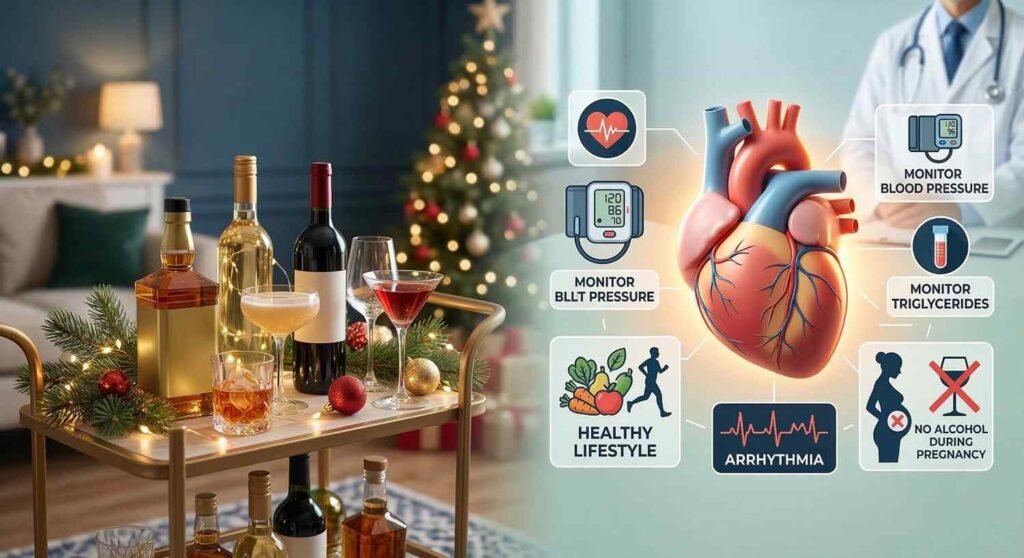
EXCESSIVE AMOUNT OF ALCOHOL INTAKE CAN CAUSE CARDIOVASCULAR DISEASE (CVD)
High alcohol consumption shows a positive relationship with high blood pressure. Nowadays, alcohol is very hard to avoid in social gatherings, and many people start drinking alcohol on a daily basis. There is a clear link between regular alcohol intake and high blood pressure. Alcohol contains a high amount of calories, lacks essential nutrients, and may promote hypertriglyceridemia (high triglycerides).
Alcohol consumption is a behavioral risk factor. Three or more drinks per day share similar and probably additive effects on some forms of cardiovascular disease. Most evidence suggests that consumption in the range of 3 to 14 drinks per week is associated with a higher risk of heart attack (i.e., myocardial infarction) and possibly other forms of cardiovascular disease, such as blockage in an artery that supplies blood to the brain, resulting in a deficiency of blood flow (i.e., ischemic stroke), or failure of the heart to pump blood sufficiently throughout the body (i.e., congestive heart failure).
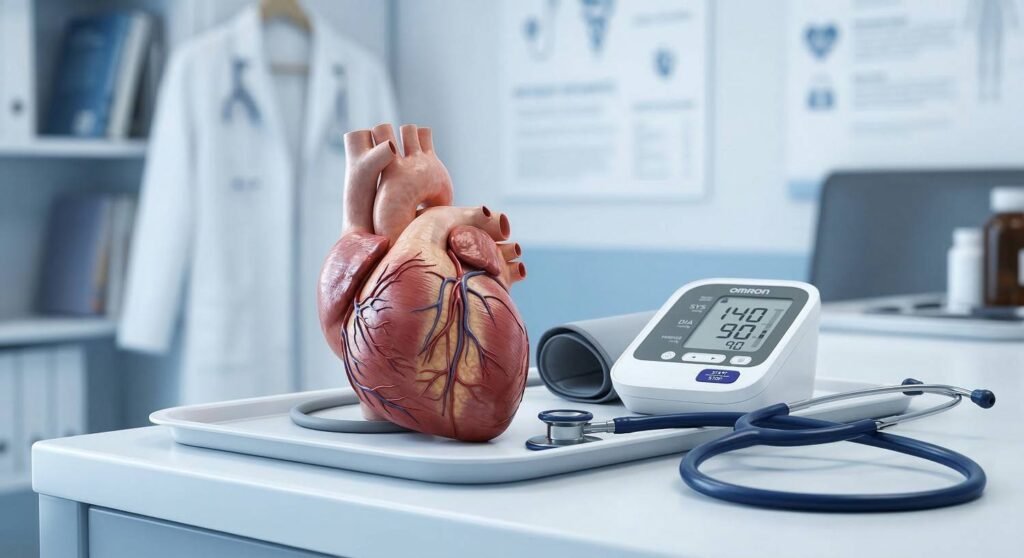
In healthy adults, consuming low-to-moderate amounts of alcohol each day typically has no short-term (acute) or substantial impact on hemodynamics or blood pressure (BP). However, data suggest that binge drinking (more than five standard drinks in a single sitting) is associated with transient increases in BP that range from 4 to 7 mmHg for systolic BP and 4 to 6 mmHg for diastolic BP (Potter et al., 1986; Rosito et al., 1999; Seppä and Sillanaukee, 1999) [1]. Sometime short -term abnormal heart rhythm which is commonly known as HOLIDAY HEART SYNDROM(HHS) OR, arrhythmia,HHS Can cause stroke or other complications. Researchers gave this syndrome its name when they saw more atrial fibrillation (AFib) cases related to alcohol use in December and January [5]. Decades of research have led to inconsistent recommendations and mixed messages about alcohol use and cardiovascular conditions such as hypertension, myocardial infarction (MI), stroke, heart failure (HF), and cardiac arrhythmias. Although excessive alcohol use is a leading preventable cause of chronic medical conditions, low-to-moderate alcohol consumption (e.g., no more than 1–2 drinks a day) has been hypothesized to confer a cardioprotective effect by reducing the risk of several forms of CVD.[2]
Effects of Alcohol on heart are: –
- Dilated Cardiomyopathy
- Atrial Fibrillation
- Dyslipidemia
Female & Alcohol: –

Misuse of alcohol in the long term may cause heart disease. Even though women generally consume less alcohol than men over their lifetime, women are more susceptible to alcohol-related heart disease than men. Pregnant women must not consume any alcohol during pregnancy. Prenatal alcohol exposure may cause children to experience physical, cognitive, and behavioral problems, which can be components of Fetal Alcohol Spectrum Disorder (FASD).
During pregnancy, alcohol consumption can also cause preterm labor and miscarriage.
MALE & ALCOHOL: =

In healthy adults, consumption of low to moderate amounts of alcohol each day typically has no short- term (i.e, acute) or substantial impact on hemodynamics or blood pressure (BP). [3].
In 2019 nearly 2.4 million deaths attributed to alcohol. Some countries also found a four-time increased risk of morbidity in individuals who drink alcohol. [4]. For men excessive consumption is a major cause of hypertension and cardiomyopathy (weakened heart muscle) and arrhythmias, which can be partially reversed with abstinence.
GUIDE LINES: =
- MONITOR DRINKING HABIT
- CONSULT WITH THE DOCTOR
- HEALTHY LIFESTYLE
- MONITOR BLOOD PARAMETERS
- NUTRITIOUS FOOD

SUMMARY
People should avoid or limit alcohol intake. pregnant women should not take any type of alcohol during pregnancy or after that. Must intake highly nutritious foods which is low in saturated fat, add fruits 1-2 times in a day. Maintain healthy lifestyle- stress free life, balanced diet, daily exercise. Must monitor blood pressure and triglycerides.
DR. SUNDAN SIKDAR – MD,DM (GB Pant, Delhi)
REFERENCES:-
1.
ALCOHOL USE AND CARDIOVASCULAR DISEASE: A SCIENTIFIC STATEMENT FROM THE AMERICAN HEART ASSOCIATION https://www.ahajournals.org/doi/10.1161/CIR.0000000000001341 .
2.
ALCOHOL’S EFFECTS ON HEALTH https://www.niaaa.nih.gov/publications/brochures-and-fact-sheets/women-and-alcohol .
3.
ALCOHOL’S EFFECTS ON THE CARDIOVASCULAR SYSTEM https://pmc.ncbi.nlm.nih.gov/articles/PMC
4.
THE IMPACT OF ALCOHOL CONSUMPTION ON CARDIOVASCULAR HEALTH: MYTHS ANDMEASURES https://world-heart-federation.org/wp-content/uploads/WHF-Policy-Brief-Alcohol.pdf .
5.
WHAT IS HOLIDAY HEART? https://my.clevelandclinic.org/health/diseases/holiday-heart-syndrome .