Cardiovascular Disease (CVD) is a general term used to describe diseases of the heart and blood vessels. Coronary Artery Disease (CAD) is the most common form of CVD. CVD is a common cause of death in most countries nowadays. In India, CVD caused 4.80 million deaths in 2020, which is about one in four deaths [1].
Myocardial infarction and congestive heart failure are common disorders and complications of CAD.
Patients suffering from CVD can improve their health through proper diet, medication, and through lifestyle modification. Diet therapy is a very crucial treatment for patients with CVD.
Objectives:
-
- Maintenance of good nutrition.
-
- Maximum rest to the heart.
-
- Proper medication.
-
- Exercise.
Principles:
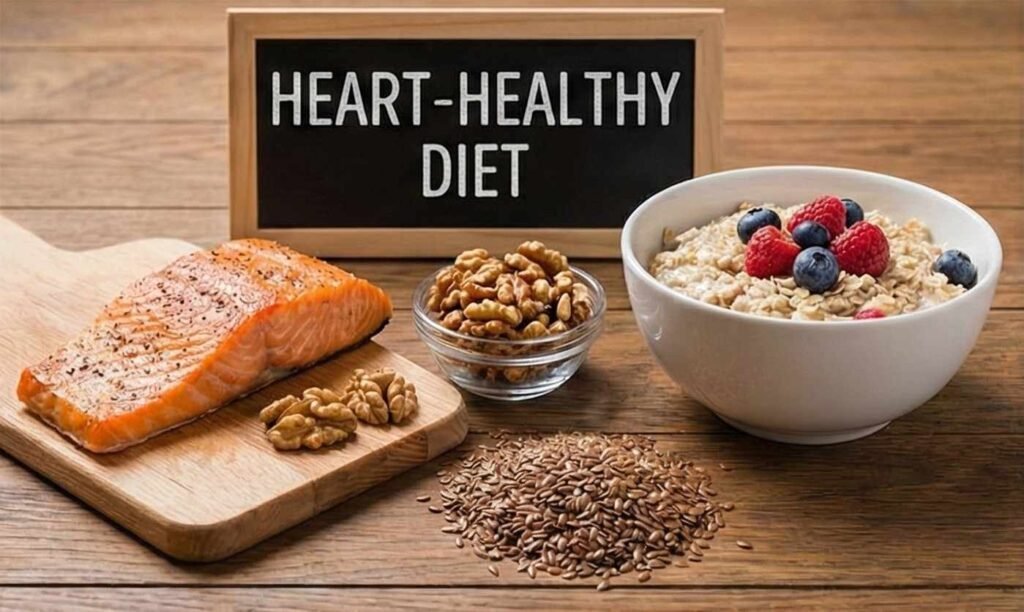
The principle of the diet should be low calories, low fat (especially low saturated fat), low cholesterols, high in PUFA with Omega 3 and Omega 6 fatty acids, moderate carbs, normal amount of protein, adequate minerals and vitamins, and a high amount of fiber with a high amount of antioxidant is recommended.
Total calorie consumption of a patient with CVD must be restricted so as to reduce weight to the normal parameter for the height, age, and sex. In general, a 1200 calorie to 1400 calorie diet is suitable for an obese patient in bed, 1600-1800 calories for a normal weight cardiac patient to maintain weight, and 1700 to 2000 calories for a low-weight cardiac patient to prevent muscle wasting.

CHARBOHYDRATE
| Do’s | Don’ts |
| 1. Only refined carbohydrate should be included. 2. Complex carbohydrate such as oat bran, oatmeal, dalia, bajra, etc. 3. By restricting carbs, we can control serum carbohydrate levels. |
1. Avoid refined flour like maida and refined sugar. 2. High carbohydrate can increase fasting triglyceride levels. |
PROTEIN
| Do’s | Don’ts |
| > Only lean meat (chicken breasts) with high protein content should be included if needed. > According to World Health Organization (WHO)[2] [3]egg white can be consumed more frequently than whole eggs. |
> Patient with atherosclerosis should avoid excess animal protein. > Egg yolk should be avoided. > Red meat such as mutton, beef, and pork should be avoided; organ meat should also avoided. |
FAT
| Do’s | Don’ts |
| > Fat intake should not be more than 20% of total kcal. > Include PUFA – Omega 3 & 6 fatty acids in daily diet. > Include Omega 3 rich foods like fatty fish (salmon, tuna, sardine, etc.), walnuts, flax seeds, and chia seeds. > Vegetable oils like rice bran, flax seed, mustard, and soybean oil can be used in daily diet. |
> Avoid fried, oily, packaged foods. > Avoid butter and ghee. |
MINERALS
| Do’s | Don’ts |
| > Low fat milk, yogurt, curd, and cheese should be included in the diet, which are excellent sources of iodine for CVD patients. > Key minerals for CVD are Magnesium, Potassium, Calcium & Zinc. > Calcium rich heart-healthy foods for CVD patients include plant milk (soya, almond), orange juice, tofu, and small fish with bones like bata, charapona, rohu, etc. > Cumin is a good source of calcium which can be included in a CVD patient’s diet. |
> Sodium is restricted in CVD patients’ diet. |
ANTIOXIDANTS
| > High antioxidant for CVD patients which focuses on oxidative stress. > Antioxidants improve blood vessel function. > High antioxidant fruits like guava, amla, kiwi, and dragon fruit can be added to the daily diet. > Antioxidants help to reduce free radicals in the body. |
VITAMINS
| > Vit-B6, B12, and folic acid decrease risk of CVD related to homocysteine risk factors. > Vit-C containing fruits like amla, mausambi, and kiwi can be added to daily diet. > Patients with CVD should consume green leafy veg, salads, and whole fruits with skin. |

Duration of Meals and Exercise
The meal intake should be frequent, 5-7 meals with small portions instead of 2 big meals. Dinner must be 2 or 2 and a half hours before bed. Smoking and drinking of alcohol should be stopped.
DR. SUNDAN SIKDAR – MD,DM (GB Pant, Delhi)
References
- Cardiac Cases After SARS Cov2 (With Stats And Figures From India : https://www.narayanahealth.org/blog/heart-problems-after-covid
- Healthy Diet, World Health Organization : https://www.who.int/news-room/fact-sheets/detail/healthy-diet
- The Relationship Between Eggs, Cholesterol and Heart Health : https://health.clevelandclinic.org/how-many-eggs-can-you-eat-on-a-heart-healthy-diet