
People in India suffering from cardiovascular disease (CVD) should carefully choose their dietary fats. It is important to avoid trans fats and saturated fats found in oils such as ghee, butter, lard, and coconut oil.
Monounsaturated fatty acids (MUFA) and polyunsaturated fatty acids (PUFA) are beneficial for patients with cardiovascular disease. Suitable oils include olive oil, canola oil, chia seed oil, flaxseed oil, walnut oil, mustard oil, avocado oil, and rice bran oil.
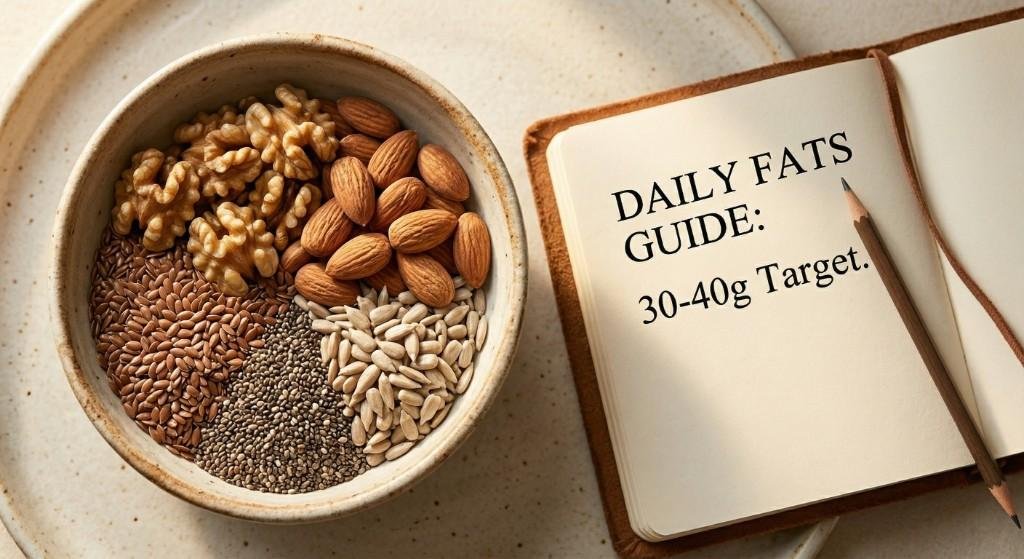
A minimal but adequate fat intake is necessary. CVD patients can consume about 30–40 grams of oil per day (approximately 2–3 tablespoons). Generally, fat should contribute around 15–20% of total daily calorie intake. Fat is essential for providing essential fatty acids, supporting nutrient absorption, maintaining cell function, and aiding hormone production.
People with CVD should avoid fatty meats that contain high amounts of saturated fat, such as mutton, lamb, pork, beef, and processed meats. Red meat, in particular, can increase blood cholesterol levels and should be limited or avoided.
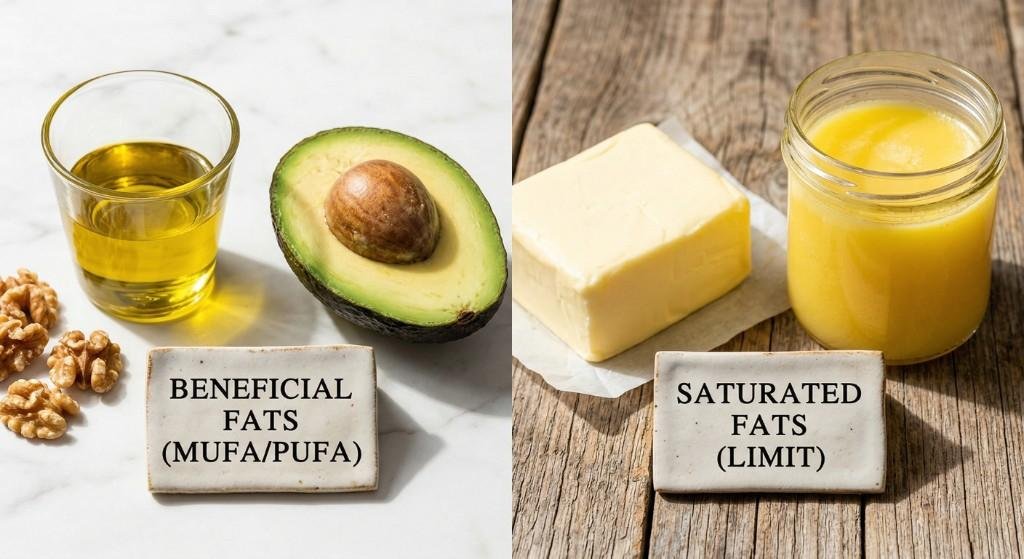
Choosing the right type and amount of fat in the daily diet, along with selecting healthy cooking oils, can help manage blood cholesterol levels, reduce inflammation, and lower the risk of cardiovascular disease.
Unsaturated Fatty Acids and Heart Health
Heart patients should include unsaturated fatty acids in their diet, as they are beneficial for heart health. Polyunsaturated fatty acids (PUFA), especially omega-3 fatty acids, are particularly helpful for CVD patients. They help reduce inflammation, decrease the risk of arrhythmias, and lower triglycerides and LDL (bad cholesterol) levels.
Main Types of PUFAs:-
- Omega-3 Fatty Acids
- Omega-3 fatty acids provide energy and play important roles in the heart, blood vessels, lungs, hormones, and immune system.
- Alpha-linolenic acid (ALA): The body cannot produce ALA, so it must be obtained from food.[1]
- Eicosapentaenoic acid (EPA): The body can convert ALA into EPA, but only in small amounts.
- Docosahexaenoic acid (DHA): ALA can also be converted into DHA, but in very limited amounts.
2. Omega-6 Fatty Acids
Sources of PUFAs:-
- Omega-3 (EPA & DHA): Found in fatty fish such as salmon, tuna, mackerel, and sardines.
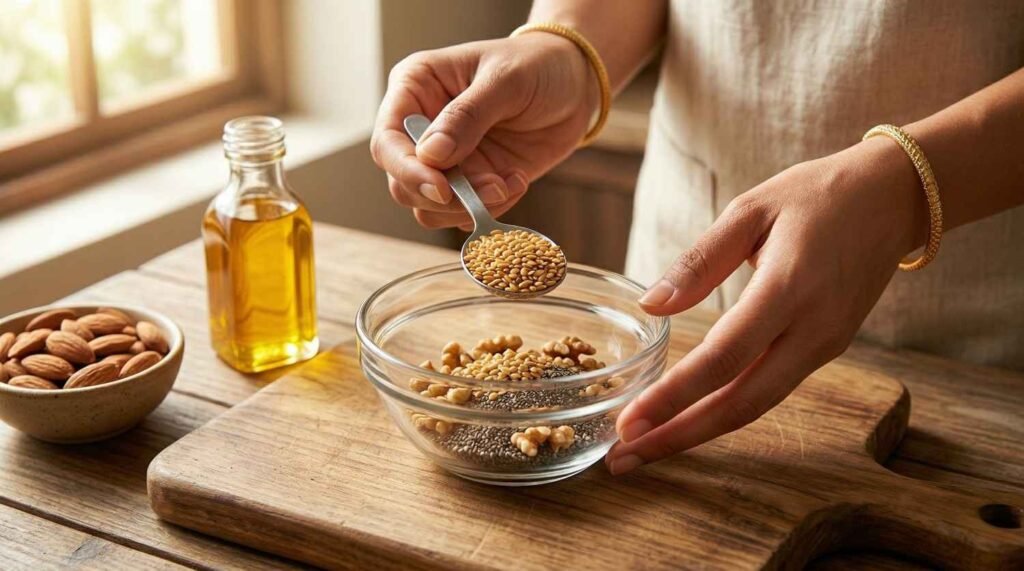
- Omega-3 (ALA): Found in chia seeds, flaxseeds, walnuts, etc. (beneficial for heart patients).
- Omega-6: Found in vegetable oils such as soybean oil and sunflower oil.
Oils Good for Heart Patients:=
- Olive oil: Rich in monounsaturated fatty acids; ideal for salads and heart-healthy cooking.
- Mustard oil: Contains both MUFA and PUFA (omega-3 and omega-6) and has low saturated fat content; widely used in India.
- Rice bran oil: Extracted from the outer layer of brown rice; contains MUFA and PUFA with low saturated fat. It is also rich in antioxidants such as tocopherols and tocotrienols.[2]
- Sunflower oil: A good source of vitamin E and low in saturated fats.
- Soybean oil: A good source of omega-3 fatty acids and supports heart health when used in moderation.
DR. SUNDAN SIKDAR – MD,DM (GB Pant, Delhi)
REFERENCES :-
- OMEGA-3 FATTY ACIDS – https://ods.od.nih.gov/factsheets/Omega3FattyAcids-Consumer/
- RICE BRAN OIL – AN OVERVIEW – https://www.sciencedirect.com/topics/pharmacology-toxicology-and-pharmaceutical-science/rice-bran-oil